Responsive 24/7 Remote Managed IT Support
Always-on technology. Secure systems. Consistent performance. As organizations move toward cloud platforms and distributed teams, traditional on-site IT support is no longer enough. Businesses now need proactive IT services that keep systems running smoothly without delays. Enter remote managed IT support.
At CloudScale365, we deliver superior IT support for SMBs that combines continuous monitoring, strong security, and performance optimization. Our services help businesses reduce downtime, improve system reliability, and maintain full visibility into their IT environment, no matter where their teams are located.
Why IT Support is Critical for Modern Businesses
Today’s businesses operate in fast-paced digital environments. Employees work from offices, homes, and remote locations. As a result, IT systems must remain accessible, secure, and stable at all times.
Without IT support, organizations often struggle with slow response times, unplanned outages, and security gaps. These issues disrupt operations and increase operational risk. In contrast, remote IT support ensures problems are identified and resolved before they affect users. In addition, this type of IT support allows businesses to scale efficiently. As teams grow or adopt new tools, IT systems can be managed centrally without the need for constant on-site visits.
What Is Remote Managed IT Support?
Remote managed IT support is a proactive IT service model where systems are monitored, maintained, and secured remotely using specialized tools and processes. Instead of waiting for problems to occur, IT professionals actively manage your environment around the clock.
At CloudScale365, our remote managed IT support includes:
- Continuous system monitoring
- Automated alerts and issue resolution
- Security management and threat detection
- Patch management and updates
- Performance optimization
By managing IT remotely, we deliver faster response times and consistent service while reducing operational costs.
How it Works
Remote managed IT support relies on advanced monitoring tools and automation. These tools provide real-time visibility into your IT infrastructure and help identify issues early.
We use IT RMM software to track system health, performance, and security status. This software allows us to detect unusual behavior, hardware failures, or security threats before they escalate. In addition, the software enables automated maintenance tasks such as patching, updates, and system checks. As a result, your IT environment remains stable without manual intervention.
Benefits
Remote managed IT support offers clear advantages for businesses of all sizes. Instead of reacting to problems, organizations gain a proactive IT strategy that supports growth and stability.
Key benefits include:
- Reduced downtime through early issue detection
- Faster response times with remote access
- Lower IT costs compared to on-site support
- Improved security and compliance
- Better system performance and reliability
For example, proactive monitoring helps prevent outages that could otherwise disrupt daily operations.
Remote vs Traditional IT Support
Traditional IT support often relies on on-site visits and reactive troubleshooting. While this model may work for small environments, it struggles to meet modern business demands. Remote managed IT services provide a more efficient approach. Systems are monitored continuously, and issues are resolved remotely in real time, reducing delays and improving consistency. In addition, remote managed IT services allow businesses to support distributed teams without expanding internal IT staff. This model is both scalable and cost-effective.
24/7 Monitoring
Continuous monitoring is the foundation of effective IT support. Without visibility, IT teams cannot respond quickly to problems. CloudScale365 uses enterprise-grade IT remote monitoring software to track system performance, uptime, and security events. The software provides alerts when thresholds are exceeded or unusual activity is detected. Because monitoring runs 24/7, issues can be addressed outside of normal business hours to ensure maximum uptime and business continuity.
RMM Software for Proactive IT Management
IT RMM software plays a critical role in remote managed IT support. It allows IT teams to automate tasks, manage endpoints, and resolve issues efficiently. With IT RMM software, we can:
- Deploy updates and patches automatically
- Monitor hardware and software health
- Run automated maintenance scripts
- Respond to alerts in real time
This automation reduces human error and ensures consistent system performance across all devices.
Security-First Support
Security is a top concern for businesses operating in remote environments. Cyber threats continue to evolve, and unmanaged systems are vulnerable. Our remote managed IT support prioritizes security through continuous monitoring, threat detection, and access control. We identify vulnerabilities early and apply security updates promptly. In addition, we help businesses implement strong security practices, including endpoint protection, secure access policies, and data protection measures. This layered approach reduces risk and improves resilience.
System performance directly impacts productivity. Slow systems frustrate users and reduce efficiency. Remote managed IT support focuses on performance optimization by monitoring resource usage and identifying bottlenecks. When performance issues arise, they are resolved remotely without disrupting users. Over time, proactive optimization leads to smoother operations and a better user experience.
IT Support for Growing Businesses
As businesses grow, IT complexity increases. New users, devices, and applications require ongoing management. Remote managed IT support provides a scalable solution that grows with your organization, enabling centrally-managed systems and quick device onboarding. This flexibility allows businesses to expand without worrying about IT limitations.
Help for Remote and Hybrid Workforces
Remote and hybrid work models require reliable IT support that is not tied to physical locations. Remote managed IT support ensures consistent service for all employees, regardless of where they work. By managing systems remotely, CloudScale365 supports productivity while maintaining security and compliance. Employees receive fast assistance, and systems remain stable.
Integration with Managed IT Services
Remote managed IT support works best when combined with broader managed IT services. This integrated approach ensures complete coverage across infrastructure, security, and user support. CloudScale365 support services align with your business goals. From monitoring to strategic planning, we provide end-to-end IT support.
Proactive Measures to Prevent Downtime
Proactive remote managed IT support focuses on prevention. By monitoring systems continuously and applying updates, we reduce the risk of failures. This proactive approach leads to fewer disruptions and more predictable IT performance. Over time, businesses benefit from improved reliability and lower support costs.
Why Choose CloudScale365?
Choosing the right IT partner is essential. CloudScale365 delivers remote managed IT support that combines technical expertise with a business-focused approach. Businesses choose us because we offer:
- 24/7 monitoring and support
- Advanced IT RMM software
- Proactive security management
- Scalable service models
- US-based expertise
We focus on long-term partnerships and measurable results.
Get Started
Reliable support is essential for businesses that depend on technology every day. CloudScale365 helps organizations improve uptime, enhance security, and optimize performance through proactive remote IT services. If you are looking for dependable remote services, our team is ready to help. Get in touch with us to schedule a consultation and take control of your IT environment today.
Frequently Asked Questions About Remote Managed IT Support
Q: What is remote managed IT support?
A: Remote managed IT support is a proactive service that monitors, maintains, and secures IT systems remotely using advanced tools.
Q: How does IT remote monitoring software help?
A: IT remote monitoring software provides real-time visibility into system health and alerts IT teams to issues early.
Q. Is remote managed IT support secure?
A: Yes. When implemented correctly, remote managed IT support improves security through continuous monitoring and fast response.
Q: Can remote IT support replace on-site IT?
A: For most businesses, remote managed IT support reduces or eliminates the need for frequent on-site visits.
Q: Is remote managed IT support suitable for small businesses?
A: Yes. It is cost-effective and scalable, making it ideal for small and mid-sized organizations.
Safeguard Your SMB: Why Endpoint Protection is Key
As small and mid-sized businesses increasingly rely on digital devices to operate, protecting those devices from cybersecurity threats has become a top priority. Endpoint security is crucial in safeguarding your organization’s sensitive data and network. In this blog, we’ll dive into endpoint security: what it is, why it’s vital for your business, and best practices for implementing robust protection.
At CloudScale365, we understand the significance of cybersecurity and offer complete IT desktop and endpoint security solutions designed to keep your business safe. Let’s explore how endpoint protection can help shield your company from the growing threat of cyberattacks.
What is Business Endpoint Security and why is it Crucial?
Business endpoint security refers to the protection of all devices (endpoints) that connect to your company’s network. These devices can include computers, mobile phones, tablets, laptops, and any other digital device that accesses the corporate network. Each device presents a potential entry point for malicious actors. From malware and phishing to ransomware and different types of cyberattacks, endpoint security aims to:
- Prevent Data Breaches: Endpoint protection prevents unauthorized access to your company’s sensitive information, helping to avoid costly data breaches.
- Safeguard Company Devices: Devices like laptops and smartphones are often the most vulnerable targets, mainly when used remotely or by employees outside the office.
- Mitigate Cyber Threats: Attackers can encrypt files on your devices, rendering them inaccessible until a ransom is paid. Endpoint security detects and blocks malware, ransomware, and phishing attacks before they can execute, reducing the risk of these cyberthreats compromising your network.
The Growing Importance of Endpoint Protection
The digital landscape is constantly evolving, and so are the threats your business faces. Endpoint security has never been more crucial, particularly with remote work on the rise and businesses becoming increasingly interconnected. Without a solid endpoint protection strategy in place, your business could be vulnerable to a range of risks; here’s why it should be a priority.
Increasing Number of Cybersecurity Threats
As businesses embrace more connected devices and cloud-based systems, the risk of cyberattacks increases. Malware is a common threat—employees and clients unknowingly install malware on their devices through email attachments, infected websites, or malicious software. Endpoint security tools detect and block these threats before they can cause damage. By securing all endpoints, businesses can prevent attackers from exploiting weak links in the network, ensuring that the entire system remains secure. Learn more about strengthening your network security with CloudScale365’s cybersecurity solutions.
Growing Remote Workforce
Remote work has become the new norm for many businesses, creating more entry points for cybercriminals. With employees using various devices from different locations, it’s vital to manage and secure each endpoint. Centralized device management allows businesses to enforce security policies and track device compliance, while endpoint security ensures that remote workers can access company resources without compromising the integrity of your network. Learn more about protecting your workforce with CloudScale365’s mobile device management solutions.
How Endpoint Protection Mitigates Cybersecurity Risks
Effective endpoint protection solutions come with several key features that provide comprehensive security for your devices:
- Real-Time Threat Detection: Continuous monitoring of endpoints ensures immediate detection of any potential threats.
- Behavioral Analysis: By analyzing device and user behaviour, endpoint security solutions can identify anomalies that indicate potential security breaches.
- Centralized Management: A unified platform enables businesses to manage security policies, monitor devices, and enforce compliance from a single location.
Best Practices for Implementing Endpoint Security
To ensure robust endpoint protection, businesses must follow a few key best practices. These strategies help mitigate the risks associated with insecure endpoints and provide an additional layer of security against cyberattacks.
Perform Regular Software Updates
Keeping software up to date is one of the most effective ways to secure endpoints. Many cyberattacks exploit known vulnerabilities in outdated software, so monitoring and patching these vulnerabilities is crucial.
- Automatic Updates: Enable automatic updates for operating systems and applications to ensure that security patches are installed as soon as they become available.
- Consistent Monitoring: Regularly check for updates across all devices in your organization, especially those used by remote employees.
Implement Strong Authentication Methods
One of the easiest ways to protect devices is through strong authentication methods. Requiring multi-factor authentication (MFA) adds another layer of security when accessing sensitive data or systems.
- Two-Factor Authentication (2FA): 2FA ensures that even if an attacker gains access to login credentials, they still require a second piece of information, such as a text message code, to gain access.
- Biometric Authentication: Devices that utilize biometric features, such as fingerprints or facial recognition, add an extra layer of protection against unauthorized access.
Offer Regular Employee Training and Threat Awareness
Employees are often the weakest link in cybersecurity. It’s crucial to provide training on how to recognize phishing attempts, suspicious emails, and other common cyber threats.
- Phishing Awareness: Train employees to avoid clicking on suspicious links or opening attachments from unknown senders.
- Safe Internet Practices: Encourage employees to avoid using public Wi-Fi for business-related activities and to use VPNs for secure connections.
Endpoint security is no longer a luxury but a necessity for businesses of all sizes. By protecting your devices and network from potential threats, you ensure that your data and operations remain secure. With the proper endpoint protection in place, your business can mitigate risks, reduce the likelihood of breaches, and operate confidently in the digital age.
CloudScale365 Makes Your Endpoint Security Our Priority
Let CloudScale365 help you safeguard your business from cyber threats with our comprehensive cybersecurity solutions. For more information on how to implement endpoint security for your business, visit our Endpoint Security Page.
FAQs (Frequently Asked Questions)
What is Java hosting?
Java hosting is a specialized web hosting service designed to support applications built in Java. It provides the necessary infrastructure to ensure smooth operation, performance, and security for Java-based applications.
Why is Java hosting ideal for enterprises?
Java hosting provides high scalability, excellent performance, robust security, and tailored enterprise environments. It’s perfect for businesses that rely on complex Java applications, offering flexibility to meet growing demands.
What are the benefits of using CloudScale365 for Java hosting?
CloudScale365 offers optimized servers for Java applications, 24/7 expert support, scalable resources, and secure hosting solutions tailored to enterprises’ needs.
How do I choose the best Java hosting service?
When selecting a Java hosting provider, consider factors like compatibility with your Java version, performance optimization, support availability, and scalability. CloudScale365 excels in these areas, making it a top choice for enterprises.
Can I scale my Java hosting as my business grows?
Yes, with Java hosting at CloudScale365, you can scale resources based on your business needs, ensuring you only pay for what you use while maintaining optimal performance.
How secure is Java hosting?
Java hosting services, like those provided by CloudScale365, include advanced security measures such as SSL certificates, intrusion detection systems, and data encryption, ensuring that your applications and data are well protected.
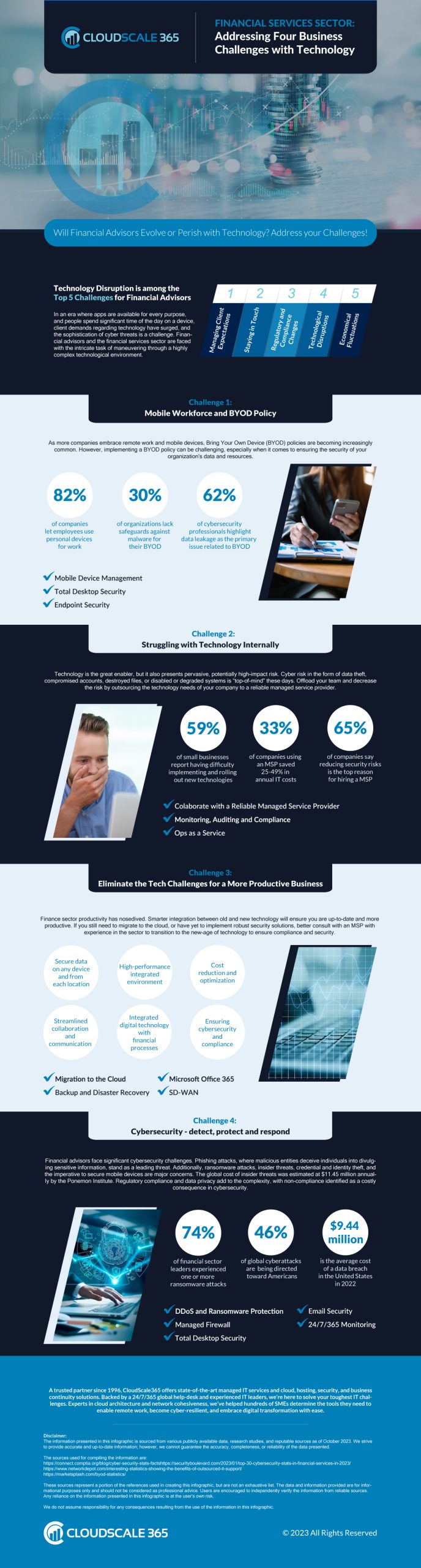
Will Financial Advisors Evolve or Perish with Technology? Addressing the Challenges Ahead
The financial advisory landscape is standing at the precipice of a technology-driven revolution. In a world where applications cater to every need and people spend a significant portion of their day on their digital devices, client expectations regarding technology have surged. Simultaneously, the sophistication of cyber threats has increased, presenting a significant challenge. Financial advisors and the broader financial services sector face the intricate task of navigating this change and adapting to the increasing customer’s requirements and expectations. This infographic delves into the top challenges faced by financial advisors and explores how they can evolve to not only survive but thrive in this era of technological transformation with the smart help of managed services.
Challenge 1: Embracing a Mobile Workforce and BYOD Policy
The advent of remote work and the prevalence of mobile devices have led to the rise of Bring Your Own Device (BYOD) policies. However, ensuring the security of organizational data and resources in this scenario remains a significant challenge. Recent statistics highlight the extent of this challenge:
- 82% of companies permit employees to use personal devices for work.
- 30% of organizations lack adequate safeguards against malware for their BYOD.
- 62% of cybersecurity professionals identify data leakage as a primary concern linked to BYOD.
To mitigate this challenge, financial advisors need to prioritize robust Mobile Device Management (MDM) solutions, total desktop security, and comprehensive endpoint security. Working closely with Managed Service Providers (MSPs) can provide the expertise and technological infrastructure necessary to secure a mobile workforce effectively.
Challenge 2: Navigating Internal Technological Challenges
Technology is a powerful enabler, but it also poses pervasive and potentially high-impact risks. Cyber threats in the form of data theft, compromised accounts, or disrupted systems pose significant concerns. Many financial advisory firms are now considering outsourcing their technology needs to reliable managed service providers (MSPs) to mitigate these risks. Key statistics pertaining to this challenge are:
- 59% of small businesses struggle with implementing and rolling out new technologies.
- 33% of companies utilizing an MSP report significant cost savings in annual IT expenditures.
- 65% of companies cite the reduction of security risks as a primary motivation for hiring an MSP.
Collaborating with a reliable managed service provider can provide financial advisors with the expertise and support necessary to navigate the technological landscape effectively. MSPs can offer comprehensive solutions including network security, proactive monitoring, and efficient tech deployment, allowing financial advisors to focus on their core functions.
Challenge 3: Overcoming Technological Hurdles for a More Productive Business
Productivity within the finance sector has faced a downturn, necessitating smarter integration of both old and new technologies. This integration can help financial advisors stay current and enhance productivity. Key benefits encompass:
- Secure data access from any device and location
- Streamlined collaboration and communication
- Cost reduction and optimization
- Enhanced cybersecurity and compliance
Transitioning to the new age of technology and seeking guidance from experienced MSPs can ensure a smooth transition and bolster productivity. MSPs can provide tailor-made solutions, facilitate cloud migration, and ensure compliance with industry standards, helping financial advisors embrace the digital future.
Challenge 4: Cybersecurity – Detect, Protect, and Respond
Cybersecurity remains a critical concern for financial advisors. Phishing attacks, ransomware assaults, insider threats, and identity theft represent significant threats. The cost of cyber threats is substantial, emphasizing the importance of a robust cybersecurity strategy. Pertinent statistics include:
- 74% of financial sector leaders have experienced one or more ransomware attacks.
- 46% of global cyberattacks are targeted towards Americans.
- The average cost of a data breach in the United States in 2022 was $9.44 million.
Financial advisors must invest in email security, round-the-clock monitoring, managed firewalls, and comprehensive desktop security to fortify against cyber threats. Partnering with MSPs specialized in cybersecurity can provide financial advisors with the necessary expertise to detect, protect against, and respond to evolving cyber threats effectively.
In conclusion, the question of whether financial advisors will evolve or perish with technology is critical and timely. Embracing the right technology and partnering with trusted allies like CloudScale365, which offers managed IT services and expertise in cloud hosting, security, and business continuity, can be instrumental in navigating these challenges successfully. By proactively addressing these challenges and leveraging the expertise of MSPs, financial advisors can not only survive but thrive in this evolving landscape of technology in the financial services sector.