CloudScale365, Valeo Networks, and PCS International Unite as Forte Technologies
Threeleadingproviders become one national managed IT, cybersecurity, private and public cloud, and compliance partner,offeringcustomers deeper industryexpertiseand expanded capabilities, delivered by the same teams they already know.
IRVING, Texas, July 22, 2026 /PRNewswire/ — CloudScale365, Valeo Networks, and PCS International today announced they have united under a single brand: Forte Technologies. A portfolio company of Broadwing Capital, the combined company is a national managed IT, cybersecurity, private and public cloud, and compliance partner serving more than 3,300 customers across the country.
The name was chosen to reflect what customers said they valued most in all three organizations. A “forte” is a strong suit: the place where you excel. For Forte, that is knowing its clients’ businesses: their industry, their systems, their people, and what it takes for them to win.
“Bringing these companies together was never about getting bigger for its own sake,” said Bret Kidd, Chief Executive Officer of Forte Technologies. “Together we offer our customers more… more expertise, more capability, a deeper bench behind every account… while protecting the thing they value most: a partner who actually knows them. That’s what Forte is built to be, and we’re just getting started.”
Three Proven Companies, One Experienced Team
Bringing the three companies together provides a more robust service network. Each company brings its own field technicians and regional teams. Combined, Forte provides greater on-the-ground presence to support clients across the United States and to keep pace as those clients expand into new locations.
Forte serves growth-minded organizations, providing vertical depth in financial services, healthcare, government contractors, legal, and manufacturing. Compliance is built into the service rather than bolted on, with CMMC Level 2, HIPAA, and SOC 2 expertise handled as part of the engagement.
Expanded Service for Customers
Account teams, support processes, and existing agreements remain in place. What changes is the depth of resources behind each account: a larger engineering bench, a broader service set, and expanded expertise across managed IT, cybersecurity, private and public cloud, and compliance.
About Forte Technologies
Forte Technologies is a national managed IT, cybersecurity, private and public cloud, and compliance partner formed by CloudScale365, Valeo Networks, and PCS International. Forte serves more than 3,300 customers nationwide, pairing the scale and resources of a national provider with named teams who already know each client’s industry and environment. Forte is a portfolio company of Broadwing Capital. For more information, visit fortetechnologies.com.
About Broadwing Capital Management
Broadwing Capital is a Dallas-based private equity firm specializing in the lower middle-market manufacturing, distribution, and services sectors. The firm thoughtfully scales niche platforms into market leaders through hands-on operational support that enhances companies, cultures, and communities.
Broadwing is known for its founder-friendly approach, deeply embedded resource partners, and a values-driven commitment to long-term growth. Its team of 20 has raised over $500 million of regulatory AUM and consummated 22 transactions since 2022.
To learn more, visit our website and follow us on LinkedIn.
How managed endpoints can make a difference in patient care and clinical workflows?
Healthcare organizations are under more pressure than ever to ensure the reliability and security of the endpoints they use. Clinicians need instant access to patient data. IT teams must secure sensitive health information. And leadership must modernize infrastructure and internal IT without ballooning costs or getting trapped by legacy vendors.
With CloudScale365, hospitals, clinics, and healthcare insurers can modernize endpoint management to improve care delivery, protect patient health information (PHI), and support HIPAA compliance without vendor lock-in or legacy complexity.
Modern Healthcare Requires Modern IT
Healthcare is no longer confined to four walls. Today, patient care extends far beyond the walls of a hospital or clinic. Clinicians and care teams deliver services across hospitals and outpatient facilities, through remote consultations and home offices, and on a wide range of mobile devices, shared workstations, and diagnostic systems. In addition, care delivery increasingly relies on third-party platforms and integrated applications that connect patient data, imaging, and clinical workflows across the healthcare ecosystem.
Clinicians expect secure access to Electronic Health Records (EHRs), imaging systems, and clinical tools anywhere, anytime. At the same time, healthcare organizations face a steady rise in data breaches, ransomware attacks, and compliance risks.
This creates a fundamental tension: “How do you protect sensitive patient data without slowing down care delivery?”
Security, Privacy, and Compliance at the Forefront
Healthcare remains one of the most targeted industries for cyberattacks. Regular breaches expose millions of patient records, erode trust, and risk severe regulatory penalties.
A modern endpoint strategy must protect PHI at every access point, support HIPAA compliance and audit readiness, prevent ransomware and unauthorized access, and maintain clinician productivity under pressure. For many healthcare organizations, partnering with CloudScale365 is the most effective way to achieve this balance. By delivering fully managed endpoints, we ensure consistent security controls, continuous monitoring, and proactive support across all devices allowing clinical teams to focus on patient care while IT risks, compliance requirements, and day-to-day endpoint management are handled by specialists.
This is where fully managed endpoints make a measurable difference!
CloudScale365 balances both protecting sensitive data without creating friction for care teams.
Key Challenges in Healthcare Endpoint Management
Healthcare organizations commonly struggle with:
1. Device Diversity and BYOD
Physicians, nurses, administrative staff, and shift workers all use different devices. Managing BYOD securely without blocking access is a constant challenge.
2. Asset Tracking
Tracking the inflow and outflow of devices, especially in multi-site clinics, can quickly become unmanageable without centralized controls.
3. Ransomware and Browser-Based Attacks
Endpoints remain the primary entry point for ransomware, phishing, and credential theft.
4. Limited IT Resources
Many healthcare IT teams are stretched thin, facing skill shortages and growing device volumes.
CloudScale365 delivers centralized endpoint management for every healthcare workflow, enabling secure access without compromising care delivery.
1. Centralized Endpoint Visibility
Gain real-time insight into every managed device—across locations, roles, and departments.
2. Automated Patch Management
Keep operating systems and applications up to date without manual intervention, reducing vulnerability exposure.
3. Role-Based Access Control (RBAC)
Ensure clinicians, nurses, and administrative staff only access the systems and data they need.
4. Encryption and Remote Wipe
Protect PHI on lost or stolen devices with full disk encryption and instant remote wipe capabilities.
5. Endpoint Detection and Response (EDR)
Detect and respond to threats at the endpoint level before they disrupt operations or compromise patient data.
6. Compliance and Audit Reporting
Simplify HIPAA compliance with built-in reporting, visibility, and audit readiness.
Supporting Care Teams, Not Slowing Them Down
From physicians and nurses to diagnostic teams and shift workers, every role relies on endpoints to deliver care.
CloudScale365 enables:
Faster device provisioning—saving thousands in setup costs
Remote support for multi-site clinics
Secure access to clinical systems from anywhere
Reduced downtime during critical care moments
The result is a more resilient IT foundation that supports patient care instead of standing in its way.
Modernize Healthcare Endpoints Without Legacy Costs
CloudScale365 empowers healthcare organizations to modernize endpoint management without relying on expensive legacy infrastructure, getting locked into restrictive vendors, or navigating complex licensing models. By combining security, accessibility, and compliance into a fully managed endpoint solution, CloudScale365 removes operational friction and IT complexity – so healthcare teams can focus on what matters most: delivering high-quality patient care. Discover how CloudScale365 can simplify your endpoint strategy and strengthen patient care – talk to our team today.
Fully Managed IT Services for SMBs: A Deep Dive
Understanding Fully Managed IT Services for SMBs: What are the Benefits—and Why It Matters
Technology plays a critical role in how modern businesses operate, compete, and grow. From cloud platforms and cybersecurity to remote work tools and compliance requirements, IT environments are becoming more complex every year. For many organizations, managing all of this internally is no longer efficient or cost-effective. The solution: fully managed IT services for SMBs.
End-to-end IT management, support, and strategic guidance—all under a predictable monthly model—is the magic of fully managed IT. Instead of reacting to problems as they occur, organizations gain proactive oversight, stronger security, and expert support that aligns technology with business goals.
In this article, we will explain what fully managed IT services entail and why they matter for SMBs.
What Are Fully Managed IT Services?
Fully managed IT services are a comprehensive outsourcing model in which a third-party provider assumes full responsibility for a company’s IT environment, including systems, networks, devices, security, cloud services, and ongoing support.
Unlike break-fix IT support, which only addresses problems after they occur, a fully managed IT solution focuses on prevention, optimization, and long-term planning. A fully managed IT company acts as an extension of your business, ensuring that technology supports productivity, security, and growth.
This approach allows organizations to focus on their core operations while experienced professionals handle the complexity of IT management.
What Is Included in Fully Managed IT Support?
While services can vary by provider, most fully managed IT solutions include a core set of essential offerings designed to keep systems reliable and secure, including:
Proactive Monitoring and Maintenance
Continuous monitoring ensures that servers, networks, and devices operate efficiently. Potential issues are identified and resolved before they disrupt business operations. Regular updates, patching, and performance optimization are also part of proactive maintenance.
Help Desk and End User Support
Fully managed IT support includes a dedicated help desk that assists employees with everyday technical issues, including software problems, login issues, connectivity challenges, and device troubleshooting. Fast response times help reduce downtime and frustration.
Cybersecurity Management
Cybersecurity is a key component of a fully managed IT solution. Services often include endpoint protection, firewall management, threat detection, vulnerability management, and security updates. Many providers also assist with compliance requirements for regulated industries.
Cloud and Infrastructure Management
A fully managed IT company manages cloud platforms, on-premise infrastructure, and hybrid environments. Management includes Microsoft 365, server administration, network optimization, and device management to ensure scalability and reliability.
Backup and Disaster Recovery
Reliable data protection is essential for business continuity. Fully managed IT services typically include automated backups, secure data storage, and disaster recovery planning to help organizations recover quickly from outages or cyber incidents.
Strategic IT Planning
Beyond daily support, a fully managed IT solution includes long-term planning. Providers help businesses develop IT roadmaps, plan budgets, and align technology investments with future goals.
Why Fully Managed IT Services Matter for US Businesses
Predictable Costs and Budget Control
Fully managed IT services are typically offered on a fixed monthly rate, eliminating unexpected repair costs and enabling businesses to budget more accurately for IT expenses.
Stronger Security Posture
Cyber threats continue to grow in both frequency and sophistication. Many US businesses lack the internal resources needed to manage security effectively. Fully managed IT support provides access to advanced tools and expertise that significantly reduce risk.
Improved Productivity
When IT systems operate reliably, employees can focus on their work rather than troubleshooting technical issues. Proactive maintenance and fast support reduce downtime and keep teams productive.
Access to IT Expertise
Hiring and retaining skilled IT professionals can be expensive. With a fully managed IT company, businesses gain access to a team of specialists with diverse skill sets without the overhead of an internal department.
Scalability for Growth
As organizations grow, their IT needs change. Fully managed IT solutions scale easily to support new users, significant expansions, and technologies without major disruptions.
Fully Managed IT Services vs In-House IT
Many businesses debate whether to maintain an internal IT team or outsource to a managed provider. In-house teams often face limitations in coverage, expertise, and availability. Fully managed IT services provide broader support, continuous monitoring, and strategic planning at a predictable cost.
For SMBs, outsourcing IT management often delivers greater value and flexibility than building and maintaining an internal team.
Who Should Use Fully Managed IT Solutions?
Fully managed IT services are well-suited for:
Small and mid-sized businesses without internal IT resources
Growing companies that need scalable technology support
Organizations with cybersecurity and compliance requirements
Businesses using cloud platforms or supporting remote work
Companies seeking predictable IT costs and reduced risk
If technology is essential to your daily operations, a fully managed IT solution can provide stability and peace of mind.
How to Choose the Right Fully Managed IT Company
Selecting the right provider is critical. When evaluating a fully managed IT company, consider the following factors:
Experience working with US businesses
Strong cybersecurity capabilities
Clear service level agreements and response times
Transparent pricing models
Strategic guidance beyond basic support
A reliable provider should focus on long-term partnerships rather than just technical fixes.
Why Fully Managed IT Services Are More Important Than Ever
Digital transformation, remote work, and rising cyber threats have made IT management more complex than ever before. Businesses can no longer afford reactive IT strategies. Fully managed IT services provide proactive oversight, enhanced security, and strategic alignment, helping organizations remain competitive in a rapidly evolving landscape.
Final Thoughts
Fully managed servers offer SMBs a smarter way to manage technology, reduce risk, and support growth. By outsourcing IT management to a trusted partner, organizations gain reliable support, stronger security, and a clear technology strategy.
If you are looking for a dependable, fully managed IT solution that aligns technology with business success, CloudScale365 can help. Explore our Fully Managed IT Services to see how we support businesses with secure, scalable, and proactive IT management.
Frequently Asked Questions About Fully Managed IT Services for SMBs
Q: What is the difference between managed IT and fully managed IT services?
A: Managed IT services may cover specific areas such as monitoring or support. Fully managed IT services take complete responsibility for the entire IT environment, including strategy, security, and daily operations.
Q: Are fully managed IT services cost-effective for small businesses?
A. Yes. Many small businesses find fully managed IT services more affordable than hiring internal IT staff while gaining access to broader expertise and better security.
Q: Do fully managed IT services include cybersecurity?
A: Most fully managed IT solutions include cybersecurity services such as endpoint protection, monitoring, patch management, and threat response.
Q: Can fully managed IT support remote and hybrid teams?
A: Yes. Fully managed IT companies are well equipped to support remote and hybrid work environments through cloud management, secure access, and remote support tools.
Q: How quickly can businesses transition to fully managed IT services?
A: The transition timeline varies by infrastructure size and complexity, but most providers offer structured onboarding to minimize disruption.
Responsive 24/7 Remote Managed IT Support
24/7 Monitoring, Security, and Performance
Always-on technology. Secure systems. Consistent performance. As organizations move toward cloud platforms and distributed teams, traditional on-site IT support is no longer enough. Businesses now need proactive IT services that keep systems running smoothly without delays. Enter remote managed IT support.
At CloudScale365, we deliver superior IT support for SMBs that combines continuous monitoring, strong security, and performance optimization. Our services help businesses reduce downtime, improve system reliability, and maintain full visibility into their IT environment, no matter where their teams are located.
Why IT Support is Critical for Modern Businesses
Today’s businesses operate in fast-paced digital environments. Employees work from offices, homes, and remote locations. As a result, IT systems must remain accessible, secure, and stable at all times.
Without IT support, organizations often struggle with slow response times, unplanned outages, and security gaps. These issues disrupt operations and increase operational risk. In contrast, remote IT support ensures problems are identified and resolved before they affect users. In addition, this type of IT support allows businesses to scale efficiently. As teams grow or adopt new tools, IT systems can be managed centrally without the need for constant on-site visits.
What Is Remote Managed IT Support?
Remote managed IT support is a proactive IT service model where systems are monitored, maintained, and secured remotely using specialized tools and processes. Instead of waiting for problems to occur, IT professionals actively manage your environment around the clock.
At CloudScale365, our remote managed IT support includes:
Continuous system monitoring
Automated alerts and issue resolution
Security management and threat detection
Patch management and updates
Performance optimization
By managing IT remotely, we deliver faster response times and consistent service while reducing operational costs.
How it Works
Remote managed IT support relies on advanced monitoring tools and automation. These tools provide real-time visibility into your IT infrastructure and help identify issues early.
We use IT RMM software to track system health, performance, and security status. This software allows us to detect unusual behavior, hardware failures, or security threats before they escalate. In addition, the software enables automated maintenance tasks such as patching, updates, and system checks. As a result, your IT environment remains stable without manual intervention.
Benefits
Remote managed IT support offers clear advantages for businesses of all sizes. Instead of reacting to problems, organizations gain a proactive IT strategy that supports growth and stability.
Key benefits include:
Reduced downtime through early issue detection
Faster response times with remote access
Lower IT costs compared to on-site support
Improved security and compliance
Better system performance and reliability
For example, proactive monitoring helps prevent outages that could otherwise disrupt daily operations.
Remote vs Traditional IT Support
Traditional IT support often relies on on-site visits and reactive troubleshooting. While this model may work for small environments, it struggles to meet modern business demands. Remote managed IT services provide a more efficient approach. Systems are monitored continuously, and issues are resolved remotely in real time, reducing delays and improving consistency. In addition, remote managed IT services allow businesses to support distributed teams without expanding internal IT staff. This model is both scalable and cost-effective.
24/7 Monitoring
Continuous monitoring is the foundation of effective IT support. Without visibility, IT teams cannot respond quickly to problems. CloudScale365 uses enterprise-grade IT remote monitoring software to track system performance, uptime, and security events. The software provides alerts when thresholds are exceeded or unusual activity is detected. Because monitoring runs 24/7, issues can be addressed outside of normal business hours to ensure maximum uptime and business continuity.
RMM Software for Proactive IT Management
IT RMM software plays a critical role in remote managed IT support. It allows IT teams to automate tasks, manage endpoints, and resolve issues efficiently. With IT RMM software, we can:
Deploy updates and patches automatically
Monitor hardware and software health
Run automated maintenance scripts
Respond to alerts in real time
This automation reduces human error and ensures consistent system performance across all devices.
Security-First Support
Security is a top concern for businesses operating in remote environments. Cyber threats continue to evolve, and unmanaged systems are vulnerable. Our remote managed IT support prioritizes security through continuous monitoring, threat detection, and access control. We identify vulnerabilities early and apply security updates promptly. In addition, we help businesses implement strong security practices, including endpoint protection, secure access policies, and data protection measures. This layered approach reduces risk and improves resilience.
Performance Optimization
System performance directly impacts productivity. Slow systems frustrate users and reduce efficiency. Remote managed IT support focuses on performance optimization by monitoring resource usage and identifying bottlenecks. When performance issues arise, they are resolved remotely without disrupting users. Over time, proactive optimization leads to smoother operations and a better user experience.
IT Support for Growing Businesses
As businesses grow, IT complexity increases. New users, devices, and applications require ongoing management. Remote managed IT support provides a scalable solution that grows with your organization, enabling centrally-managed systems and quick device onboarding. This flexibility allows businesses to expand without worrying about IT limitations.
Help for Remote and Hybrid Workforces
Remote and hybrid work models require reliable IT support that is not tied to physical locations. Remote managed IT support ensures consistent service for all employees, regardless of where they work. By managing systems remotely, CloudScale365 supports productivity while maintaining security and compliance. Employees receive fast assistance, and systems remain stable.
Integration with Managed IT Services
Remote managed IT support works best when combined with broader managed IT services. This integrated approach ensures complete coverage across infrastructure, security, and user support. CloudScale365 support services align with your business goals. From monitoring to strategic planning, we provide end-to-end IT support.
Proactive Measures to Prevent Downtime
Proactive remote managed IT support focuses on prevention. By monitoring systems continuously and applying updates, we reduce the risk of failures. This proactive approach leads to fewer disruptions and more predictable IT performance. Over time, businesses benefit from improved reliability and lower support costs.
Why Choose CloudScale365?
Choosing the right IT partner is essential. CloudScale365 delivers remote managed IT support that combines technical expertise with a business-focused approach. Businesses choose us because we offer:
24/7 monitoring and support
Advanced IT RMM software
Proactive security management
Scalable service models
US-based expertise
We focus on long-term partnerships and measurable results.
Get Started
Reliable support is essential for businesses that depend on technology every day. CloudScale365 helps organizations improve uptime, enhance security, and optimize performance through proactive remote IT services. If you are looking for dependable remote services, our team is ready to help. Get in touch with us to schedule a consultation and take control of your IT environment today.
Frequently Asked Questions About Remote Managed IT Support
Q: What is remote managed IT support?
A: Remote managed IT support is a proactive service that monitors, maintains, and secures IT systems remotely using advanced tools.
Q: How does IT remote monitoring software help?
A: IT remote monitoring software provides real-time visibility into system health and alerts IT teams to issues early.
Q. Is remote managed IT support secure?
A: Yes. When implemented correctly, remote managed IT support improves security through continuous monitoring and fast response.
Q: Can remote IT support replace on-site IT?
A: For most businesses, remote managed IT support reduces or eliminates the need for frequent on-site visits.
Q: Is remote managed IT support suitable for small businesses?
A: Yes. It is cost-effective and scalable, making it ideal for small and mid-sized organizations.
What are Co-managed IT Services for Internal IT?
Co-managed IT Services—How Does Your Internal IT Team Benefit?
As technology environments become more complex, many small and medium-sized organizations find themselves caught between two realities. On one hand, organizations want to maintain control through an internal IT team. However, with these teams often stretched thin, many small and medium-sized businesses need broader expertise, better coverage, and more time to focus on strategic initiatives—all requirements that co-managed IT services can address.
Co-managed IT services offer a collaborative approach that blends internal IT capabilities with an external provider’s resources and expertise. Rather than replacing your internal team, this model strengthens it. SMBs gain flexibility, scalability, and access to advanced tools while keeping decision-making in-house.
In this article, we will break down the benefits of co-managed IT services for internal IT, including how they work in a modern hybrid environment.
How Co-managed IT Works in Practice
Co-managed IT services are a shared IT responsibility model in which an organization’s internal IT team works with a managed service provider. Both parties contribute based on their strengths, availability, and expertise.
Unlike fully outsourced IT, co-managed IT does not eliminate internal roles. Instead, it fills gaps. Internal IT teams retain control over systems, users, and priorities, while a co-managed IT provider delivers additional support, tools, and specialized skills.
This model is often compared to fully managed IT services, where an external provider handles nearly all IT operations. Co-managed IT offers a more balanced option for organizations seeking support without relinquishing ownership of their IT environment.
Co-managed IT is flexible by design. There is no single structure that fits every organization. The most effective co-managed IT arrangements are customized around business needs and internal team capabilities. Typically, responsibilities are divided as follows:
The internal IT team handles:
Strategic planning and technology alignment
Business-specific applications and workflows
End-user relationships and internal processes
Leadership, governance, and policy decisions
The co-managed IT provider supports:
Remote monitoring and management
Help desk escalation or after-hours support
Security tools and threat response
Patch management and system maintenance
Infrastructure optimization and cloud support
Many organizations rely on remote managed IT support to handle routine tasks and monitoring, allowing internal staff to focus on innovation and long-term planning.
Why SMBs Should Consider a Co-managed IT Model
Organizations adopt co-managed IT for several practical reasons. The most common driver is workload imbalance. Internal IT teams are often stretched thin by daily support requests, maintenance tasks, and security demands. Here are some key benefits that co-managed IT organizations should consider.
1. Expand IT expertise without additional hiring
Hiring specialized IT staff is expensive and time-consuming. A co-managed IT provider gives access to cybersecurity experts, cloud engineers, and infrastructure specialists without adding full-time employees.
2. Focus on strategic initiatives, offload day-to-day tasks
By reallocating routine, lower-level, time-intensive tasks to the co-managed IT provider, internal teams avoid burnout and gain clarity for higher-value work.
3. Gain enterprise-grade security and compliance
Co-managed IT providers bring enterprise-grade security tools and up-to-date threat intelligence, helping organizations maintain stronger security postures and meet compliance requirements.
4. Improve ROI with scalable, predictable IT costs
Co-managed IT services scale with your business. You can increase or reduce support as needs change, all while maintaining predictable monthly costs.
Co-managed IT Support vs Fully Managed IT Services
Understanding the difference between co-managed IT and fully managed IT is critical when choosing the right approach.
Fully managed IT services are ideal for organizations without internal IT staff or those that want to fully outsource technology management. In this model, the provider takes full responsibility for systems, support, and strategy.
Co-managed IT support, on the other hand, is designed for organizations with internal IT teams that want collaboration rather than replacement. It offers more control and customization.
Many businesses start with co-managed IT and later transition to fully managed IT services as their needs evolve. Others use co-managed IT long-term as a permanent hybrid solution.
Common Services Included in Co-managed IT
Co-managed IT services can be tailored, but most providers offer a core set of capabilities that complement internal teams.
Remote monitoring and management
Continuous monitoring ensures systems stay healthy, secure, and up to date. This is often delivered through remote IT management platforms that detect and resolve issues before they impact users.
Help desk escalation support
Internal IT teams can escalate complex or time-sensitive issues to the co-managed IT provider to ensure faster resolution.
Patch management and updates
Regular updates reduce vulnerabilities and improve system stability without consuming internal resources.
Cybersecurity support
Cybersecurity support includes endpoint protection, threat detection, vulnerability management, and incident response assistance.
Backup and disaster recovery
Co-managed IT ensures data protection strategies are in place to minimize downtime and data loss.
Is Co-managed IT Right for Your Organization?
Co-managed IT is particularly well-suited for:
Organizations with small or mid-sized IT teams
Businesses experiencing rapid growth
Companies facing increasing cybersecurity demands
IT departments struggling with workload or skill gaps
If your internal team is constantly reacting rather than planning, co-managed IT services can restore balance and improve long-term outcomes.
Choosing the Right Co-managed IT Provider
Not all providers are equally equipped to support a collaborative IT model. Choosing the right co-managed IT provider is essential for success. Key factors to consider include:
Experience working alongside internal IT teams
Clear communication and defined roles
Flexible service offerings
Strong security and compliance expertise
Transparent service level agreements
A good co-managed IT provider acts as an extension of your team, not a replacement for it. Collaboration and trust are critical.
How CloudScale365 Supports Co-managed IT Services
CloudScale365 delivers co-managed IT services designed to empower internal IT teams through collaboration, transparency, and flexibility. Our approach focuses on aligning with your existing workflows while providing the tools and expertise needed to operate efficiently and securely.
Whether you need remote IT management, advanced security support, or help desk escalation, CloudScale365 works alongside your team to strengthen your IT operations without disrupting control.If you are exploring a hybrid IT approach that combines internal leadership with expert support, CloudScale365 offers co-managed IT services built to scale with your business.
Frequently Asked Questions About Co-managed IT Services for Internal IT Teams
Q: What is the main difference between co-managed IT and managed IT?
A: Co-managed IT involves shared responsibility between an internal IT team and a provider, while managed IT typically means full outsourcing of IT operations.
Q: Does co-managed IT replace internal IT staff?
A: No. Co-managed IT is designed to support and extend internal teams, not replace them.
Q. What type of businesses benefit from co-managed IT services?
A: Medium-sized and growing organizations with existing IT staff benefit most, but any business with internal IT responsibilities can use this model.
Q: Can co-managed IT support cybersecurity needs?
A: Yes. Many organizations use co-managed IT support specifically to enhance security, monitoring, and compliance.
Q: Is co-managed IT flexible?
A: Yes. Services can scale up or down based on workload, growth, or changing business priorities.
Spotlight on Sales: Meet New VP Evan Brown
Q&A Series with CloudScale365 Leadership
CloudScale365 is entering an exciting new chapter of growth, and strong leadership is key to driving that momentum. In our latest Q&A series, we sat down with Evan Brown, CloudScale365’s new Vice President of Sales. During our time together, Evan discussed what drew him to the company, his philosophy on service-driven leadership, and how he plans to help clients, partners, and teams succeed in the year ahead. From building high-performing sales organizations to strengthening long-term customer relationships, Evan shares his perspective on what’s next for CloudScale365 and the organizations it serves.
Q: Welcome Evan! You recently joined CloudScale365 as Vice President of Sales. What drew you to the company and this opportunity?
A: CloudScale365 is at a pivotal moment with a strong foundation, loyal clients, and a real appetite for scale. What drew me in was the chance to help accelerate that momentum by bringing structure, strategy, and a relationship‑driven sales approach to a business that’s ready for its next phase of growth.
Q: You’ve spoken about leadership through service. What does that philosophy look like in practice for a sales organization?
A: For me, leadership through service means removing obstacles, developing people, and enabling sellers to do their best work. It’s listening first, coaching consistently, and building a culture where the team feels supported, empowered, and accountable.
Q: CloudScale365 is known for long-term client relationships rather than one-time transactions. How does that shape your approach to sales?
A: It means we focus on understanding the customer’s business, not just their immediate need. Our approach is consultative, outcome‑focused, and centered on earning trust over time. The goal is to ensure every engagement strengthens the partnership.
Q: You spent eight years at Dataprise in a variety of roles. What lessons from that experience are you bringing to CloudScale365?
A: I’m bringing a deep understanding of how to scale teams, build repeatable processes, and drive consistent performance across diverse sellers and segments. I also learned the power of cross‑functional alignment—sales grow fastest when marketing, operations, and delivery move as one.
Q: As CloudScale365 enters its next phase of growth, what role does the sales organization play in that journey?
A: Sales will be the engine that connects our capabilities to the evolving needs of the market. Our role is to drive predictable growth and serve as the voice of the customer, guiding where the business should invest, innovate, and prioritize.
Q: How do you think about balancing growth goals with delivering an exceptional customer experience?
A: It starts with treating growth and experience as connected, not competing priorities. When we focus on delivering value, clarity, and consistency, customers stay longer, buy more, and become advocates that help accelerate organic growth.
Q: Building high-performing sales teams is a passion of yours. What qualities do you look for in sales professionals, and how do you help them succeed?
A: I look for curiosity, accountability, resilience, and a genuine customer-first mindset. Success comes from clear expectations, ongoing coaching, transparent metrics, and creating an environment where people feel challenged and supported to grow.
Q: As you look ahead, what excites you most about the opportunity ahead for CloudScale365’s clients and partners?
A: I’m excited to bring a more proactive, strategic engagement model, one that helps clients modernize, secure, and scale with confidence. 2026 will be about delivering more value, more touchpoints, and more alignment between our solutions and the outcomes our clients care about most.
Q: Outside of work, what keeps you grounded or inspired? How do you like to spend your time away from the desk?
A: Family always comes first for me—they’re my foundation and biggest source of motivation. I also recharge with time at the beach, playing golf with friends, and giving back as a new member of my town’s athletic association Board. Those things keep me balanced, energized, and connected to my community.
Top 5 Data Privacy Challenges for Financial Firms
Despite heavy investment in security and compliance, U.S. financial service providers continue to face persistent data privacy challenges. Regulatory pressure, rapid cloud adoption, third-party integrations, and increasingly sophisticated threat actors have made protecting sensitive financial data more complex than ever.
Below, we list the five most critical data privacy challenges facing financial institutions today and how an experienced Managed Service Provider (MSP) can help address each effectively. Our customers raised these challenges, and we have a solution for each.
Navigating Complex Regulatory and Compliance Requirements
The Challenge
Financial service providers must comply with multiple overlapping regulations such as GLBA, PCI DSS, SOX, and state-level privacy laws. These frameworks impose strict requirements around data handling, access controls, auditability, breach notification, and documentation. Regulations also evolve frequently, making compliance a moving target.
Internal teams often struggle to interpret requirements, implement technical controls consistently, and maintain ongoing evidence for audits.
How CloudScale365 Helps
MSPs specializing in financial IT bring regulatory expertise and structured compliance frameworks tailored to the industry. MSPs help by:
Mapping regulatory requirements to technical controls
Automating compliance reporting and audit evidence collection
Monitoring environments continuously to maintain compliance
Learn how you can reduce compliance risk while minimizing the operational burden on internal teams with CloudScale365 Co-Managed IT solutions.
Data Sprawl and Limited Visibility Into Sensitive Information
The Challenge
No longer confined to a single system, financial data spans cloud platforms, legacy systems, user devices, email, file shares, and third-party applications. Without complete visibility, organizations cannot effectively protect or govern sensitive data.
This data sprawl increases the risk of unauthorized access, accidental exposure, and regulatory violations.
How CloudScale365 Helps
An MSP implements data discovery and classification solutions to identify where sensitive data resides and how it is used. Key capabilities include:
Automated data classification and labeling
Data Loss Prevention (DLP) policies across email, endpoints, and cloud apps
Centralized visibility into data movement and access
With improved visibility, financial organizations can enforce consistent data protection controls across their entire environment.
Identity and Access Management Gaps
The Challenge
User identities have become the primary attack vector for financial institutions. Excessive privileges, weak authentication controls, and a lack of regular access reviews expose sensitive data to both external attackers and insider threats.
Without strong identity governance, even trusted users can unintentionally compromise data privacy.
How CloudScale365 Helps
An MSP strengthens identity security using Zero Trust principles, including:
Enforcing multi-factor authentication (MFA)
Implementing conditional access based on risk, location, and device health
Conducting regular access reviews and privilege audits
Managing service accounts and privileged identities
These controls significantly reduce the risk of unauthorized data access.
Third-Party and Supply Chain Risk
The Challenge
Financial service providers rely heavily on vendors, fintech partners, and SaaS platforms. Each third party that accesses or processes sensitive data introduces additional risk—often outside the organization’s direct control.
A breach at a vendor can quickly become a regulatory and reputational issue for the financial institution itself.
How CloudScale365 Helps
An MSP helps manage third-party risk by:
Assessing vendor security posture and access levels
Limiting and monitoring third-party access to sensitive systems
Implementing least-privilege access models
Continuously monitoring third-party activity and data access
The result: reducing exposure while maintaining operational flexibility.
Incident Detection, Response, and Documentation Gaps
The Challenge
Many financial institutions lack the tools and processes needed to detect breaches early and respond effectively. Delayed detection increases data loss, regulatory impact, and recovery costs. Regulators also expect documented incident response plans and evidence of timely action.
How CloudScale365 Helps
An MSP provides continuous monitoring and incident response capabilities, including:
24/7 security monitoring and alerting
Automated threat detection and investigation
Incident containment and remediation
Documentation and reporting aligned with regulatory requirements
A proactive approach ensures faster response times and stronger regulatory defensibility.
Why MSP-Led Data Privacy Becomes a Strategic Advantage
Financial service providers face a constantly evolving threat and regulatory landscape. Addressing data privacy challenges requires specialized expertise, continuous monitoring, and advanced tooling capabilities that are difficult to sustain with internal resources alone.
By partnering with CloudScale365, financial institutions gain consistent alignment with regulatory and compliance requirements while reducing overall operational risk. We provide improved visibility and control over sensitive data across complex environments, helping organizations detect issues earlier and respond more effectively.
In an environment where data privacy expectations and cyber threats continue to rise, financial service providers can no longer rely solely on internal efforts. A strategic partnership with CloudScale365 enables organizations to protect sensitive financial data, meet regulatory obligations, and operate with greater confidence and resilience, turning data privacy from a compliance challenge into a competitive advantage.
5 IT Mistakes Financial Advisors Make
And How They Connect to the Real Problems Financial Firms Face
Financial advisors rarely make “purely technical” mistakes. The technology problems are usually symptoms of deeper practice-management issues – working 80-hour weeks, no leverage, no processes, and a firm that depends entirely on the advisor.
Many financial advisors feel trapped in the same cycle: they are too busy serving clients to fix their systems, so those systems grow older and messier over time. Legacy systems lead to many inefficiencies. Technology is not just a cost in that story; it’s one of the main escape routes.
Below are five of the most common IT mistakes financial advisors make, why they happen, and how to avoid them to support growth, compliance, and sanity. The IT mistakes below each have root causes that, when addressed, can fix the time, growth, and scalability problems many firms face.
Staying on outdated systems because “they still work!”
Old CRMs, unsupported Windows versions, legacy portfolio tools, and outdated email systems all remain in place far longer than they should. Not because advisors don’t care, but because they are simply too busy to take on a change project. As a result, the impact is felt across the firm as staff create manual workarounds and re-enter data in multiple places, integrations fail to function correctly, and productivity declines. Ironically, outdated systems create the very time constraints that prevent firms from modernizing.
Combine legacy systems with insufficient endpoint security, and security risks increase exponentially.
How to mitigate issues from legacy IT
Treat upgrades as part of running a business, not emergencies. At a minimum, financial firms should:
Maintain a technology lifecycle plan.
Budget for replacements ahead of time.
Standardize software across the firm.
Assign responsibility for updates and patching.
Moving off of outdated systems isn’t about shiny tools. It’s about reducing friction, so your team can focus on clients instead of wrestling with technology.
Underestimating cybersecurity risks because “we’re not a big target.
Many advisory firms still believe cybercriminals primarily go after big banks and large wire houses. The reality is quite the opposite: smaller RIAs and boutique advisory firms are desirable targets because they handle highly sensitive personal information, retirement account data, wiring instructions, and identity documents.
And unlike large institutions, smaller firms rarely have full-time security teams watching over them.
A single successful phishing email or compromised laptop can instantly become a compliance nightmare not to mention reputational damage with clients you’ve spent years building trust with.
Good cybersecurity is not just about avoiding fines. It’s about protecting the trust that your entire practice is built on.
Assuming your data is backed up…without actually confirming it
“Our data is in the cloud, so it’s backed up, right?”
Not necessarily, according to our IT experts.
Cloud applications protect infrastructure, but they don’t always guarantee full, point-in-time recovery of your data. Deleted files, malicious changes, or ransomware events can still leave firms stuck. Some firms also rely on a single local backup drive that sits in the office, sometimes plugged into the exact computer that gets encrypted by ransomware.
How to ensure proper data backup
Follow the 3-2-1 backup rule: 3 copies of your data, on 2 different types of storage (for example, by your MSP and in Google Cloud or AWS), with 1 copy offsite and immutable.
We suggest going even further: test your restores. Untested backups are only theoretical. Also, define your RTO (how long you can be down) and your RPO (how much data you can afford to lose). With clear metrics, your backup strategy becomes a business decision—not just a technical one.
Weak onboarding and offboarding processes for staff access
Advisory firms often grow organically a new team member joins, another leaves, roles shift, and systems are added. Along the way, access permissions become a tangled mess. From shared passwords and old logins that are never disabled to new hires “figuring things out” on their own, over time, there are far too many people with blanket access to everything.
Operationally, this makes delegating harder. In terms of security, it’s risky. And compliance? It’s a problem waiting to happen.
How to strengthen permissions
Treat identity and access as part of your firm’s architecture by employing:
Role-based access control.
Single sign-on and centralized identity.
Formal onboarding and offboarding checklists.
Least-privilege access.
A strong internal permission structure not only reduces security risk, but it also makes hiring and scaling dramatically easier.
Treating IT as a cost, not a benefit
Many advisors see IT spending as a necessary evil, something to minimize as much as possible. When firms choose technology intentionally, however, your firm can flourish. IT eliminates manual tasks, reduces advisor workload, improves client experience, enables remote and flexible work, and even makes the firm more valuable.
The fundamental shift is a change in mindset from having a “successful job” to building a scalable business. Firms that grow consistently don’t ask, “How do I spend less on IT?” but instead ask, “How do I use technology to create leverage, consistency, and free time?”
Measure ROI in time saved and risk reduced, not just licenses purchased.
Technology doesn’t replace advisors. It removes the drag that keeps advisors from doing their best work.
How CloudScale365 helps advisors navigate IT challenges
Financial advisors are busy, client-focused, growth-oriented individuals who simply haven’t had time to step back and design a technology foundation that genuinely supports the firm they’re trying to build.
IT is a complex, ongoing process. When you consult a trusted managed service provider, you’ll gain peace of mind and time to focus on your clients. CloudScale365 has all the knowledge and expertise to support regulated, data-sensitive industries like financial services. To avoid the common IT pitfalls, CloudScale365 will help your firm:
Modernize your outdated systems through lifecycle management, patching, and planned upgrades.
Strengthen cybersecurity with MFA, endpoint protection, email security, and incident response readiness.
Protect critical and sensitive data using compliant backup and disaster recovery solutions that are actually tested.
Control access properly with role-based permissions, single sign-on, and structured onboarding/offboarding.
Shift from reactive IT to proactive strategy, aligning technology investments with firm growth and valuation.
Instead of technology being a source of stress or risk, CloudScale365 helps transform it into a platform for scalability, improved client experience, and business continuity. The result is a firm that is safer, more efficient, easier to run and ultimately more valuable.
It’s Mission-Critical: Data Privacy for Financial Firms
U.S. financial service providers sit at the core of the digital economy. Banks, credit unions, fintechs, insurance firms, and investment companies process and store customer identities, financial records, payment information, investment details, and other sensitive data every day. As a result, financial institutions remain one of the most frequent targets for cybercriminals in the United States. In today’s threat landscape, data privacy is no longer just a regulatory obligation. It has become a business-critical requirement tied directly to trust, continuity, and brand reputation.
Why U.S. Financial Service Providers are Prime Targets for Cyber Attacks
Financial institutions are targeted more aggressively than almost any other sector for two primary reasons:
High-Value Data Concentration U.S. financial organizations aggregate multiple forms of highly sensitive data within their environments, including personally identifiable information (PII), banking and payment card data, credit histories and transaction records, authentication credentials, and market-sensitive or proprietary business information. This concentration of valuable data makes financial institutions especially attractive targets. Such information has immediate resale value on underground markets and can be exploited for fraud, identity theft, ransomware attacks, and large-scale financial crime.
Complex, Interconnected Systems To remain competitive and meet customer expectations, U.S. financial firms rely on complex, interconnected technology ecosystems. Legacy systems are integrated with modern cloud platforms such as Microsoft 365 and Azure, along with extensive use of third-party vendors, fintech partners, and SaaS platforms. Remote work infrastructure and mobile banking applications further extend the digital perimeter. Each integration increases the overall attack surface, raising the risk of misconfigurations, unauthorized access, and unintended data exposure.
The High Stakes for Security Breaches
One positive aspect of the U.S. financial system is that it operates under strict regulatory frameworks, including the Gramm-Leach-Bliley Act (GLBA), PCI DSS, the Sarbanes-Oxley Act (SOX), and a growing number of state-level privacy laws such as CCPA, CPRA and the NYDFS Cybersecurity Regulation. Non-compliance or data breaches can result in significant regulatory penalties, mandatory breach notifications, legal exposure, and reputational damage. As a result, even a single data privacy incident can cause substantial operational and financial disruption.
Unsure if your current controls meet U.S. regulatory expectations? Talk to CloudScale365 about compliance alignment and risk reduction.
How Financial Organizations Become Compromised
Most breaches are not the result of a single failure, but rather a combination of persistent weaknesses:
Phishing and Credential Theft
U.S. financial employees are frequent targets of sophisticated phishing attacks. A single compromised account can expose:
Email systems
Internal documents
Microsoft 365 data
Financial and customer platforms
Misconfigured Cloud Environments
As organizations adopt cloud services, a leading cause of data exposure is misconfigurations, including:
Excessive user permissions
Unsecured APIs
Missing conditional access policies
Insufficient logging and monitoring
Learn more about how regular cloud security audits can prevent breaches and ensure compliance with industry regulations.
Insider Threats and Human Error
Intentional and accidental insider risks continue to rise, such as:
Unauthorized data access
Accidental file sharing
Weak password hygiene
Limited security awareness training
Delayed Detection and Response
Without continuous monitoring, threats often go unnoticed for weeks or months, increasing the scope and impact of a breach. If you don’t know how quickly you’d detect a breach, it’s time to reassess. CloudScale365 can help strengthen your detection and response capabilities.
Top 5 Data Privacy Challenges for U.S. Financial Service Providers
Despite significant investments in cybersecurity and compliance, many U.S. financial service providers continue to struggle with data privacy. Rapid digital transformation, evolving regulatory requirements, and increasingly sophisticated threats have created persistent challenges that are difficult to address with traditional approaches. The following are the most common data privacy challenges facing U.S. financial institutions today:
Navigating complex U.S. regulatory requirements across states and federal agencies
Lack of visibility into where sensitive financial data resides
Identity and access management gaps
Third-party and supply-chain exposure
Insufficient incident response readiness and documentation
These challenges often overlap and amplify one another—making them difficult for internal teams to manage alone. Take a look at our cybersecurity checklist for financial firms and advisors for tips on combatting data privacy challenges.
Why U.S. Financial Institutions Need a Managed Service Provider (MSP)
Modern cybersecurity and data privacy demands have outpaced what most internal IT teams can sustain independently.
Scalable support without expanding internal headcount
For U.S. financial organizations, this translates into stronger security, faster response times, and demonstrable compliance. CloudScale365 delivers deep expertise, proven frameworks, and advanced tooling purpose-built for U.S. financial service providers.
Specialized Knowledge of U.S. Financial Data Privacy
CloudScale365 has strong understanding of key frameworks such and state-level privacy regulations. In addition, CloudScale365 is well-versed in data retention and residency requirements, secure adoption of Microsoft 365 and Azure environments, and the evolving threat patterns that specifically target U.S. financial institutions.
Advanced Security and Compliance Tooling
CloudScale365 leverages advanced security and compliance technologies to help financial organizations protect sensitive data and meet regulatory obligations. This includes identity and access management built on Zero Trust principles, enforcement of conditional access and multi-factor authentication, and comprehensive Data Loss Prevention (DLP) and information protection strategies. Continuous security posture management and automated compliance and audit reporting further ensure ongoing visibility and control across the environment.
Proactive, Continuous Protection
Rather than reacting after an incident occurs, CloudScale365 takes a proactive approach by continuously identifying and remediating risks before they escalate. This reduces data exposure, limits operational disruption, and strengthens overall security resilience.
For U.S. financial service providers, data privacy is no longer just about avoiding fines—it’s about:
Earning customer trust
Protecting brand reputation
Ensuring operational resilience
Supporting long-term growth
Partnering with CloudScale365 enables financial organizations to safeguard sensitive data while staying focused on innovation, customer experience, and business performance.
Last year, CloudScale365 spoke with many US-based small and medium-sized businesses that migrated their workloads and applications to the cloud. We asked them about the key factors they considered when choosing a reliable cloud service provider (CSP). For most of these SMBs, price was important, but so was finding a CSP that supported long-term business goals while being available in the short term, when needed. And here’s the truth that often gets overlooked: the right cloud service provider for your organization isn’t always the cheapest one.
Many SMBs are tempted to put price above all else. After all, budgets are tight, and cloud vendors advertise aggressively on “cost savings” headlines. But when the focus is only on price, businesses risk choosing a provider that can’t deliver on performance, scalability, or reliability. The real ROI of the cloud comes from stability, strategic enablement, and support.
Migrating to the Cloud: What SMBs Need to Solve
SMBs in the U.S. face unique challenges when adopting the cloud. Common pain points include:
Integration Complexity – SMBs often run a mix of legacy on-prem systems and modern SaaS apps. The cloud provider must support hybrid environments and seamless integration.
Scalability Without Disruption – Growth can be unpredictable. You need a cloud infrastructure that can scale quickly without forcing a major re-architecture.
Data Governance & Compliance – From HIPAA to SOC 2 to GDPR, compliance requirements don’t just apply to the big players. Your CSP should understand your regulatory obligations.
Performance Consistency – Downtime or latency issues can derail customer trust and productivity.
Support and Partnership – Mid-sized companies rarely have the luxury of large internal DevOps teams. You need a CSP that acts as a strategic partner, not just a service vendor.
How to choose a cloud service provider – The Smart Criteria
Let’s look beyond pricing and into the real differentiators that matter.
1. Technology Stack and Ecosystem
A strong cloud provider offers more than just servers – they provide ready-to-use platforms and solutions. Look for modern technologies such as:
AI/ML integration tools for analytics and automation
Security layers such as zero-trust architectures
API maturity for integration with external vendors
2. External Vendor Partnerships
No cloud exists in isolation. Your CSP’s partnerships matter because they define what you can connect to easily: CRM systems, ERP platforms, analytics tools, and more.
Look for certified alliances (e.g., Microsoft Partner Network, AWS Advanced Consulting Partners, Google Cloud Premier Partners). These relationships often ensure better interoperability and faster support when something goes wrong.
A truly reliable provider will have a track record of transparency, not just marketing promises.
4. Security & Compliance Maturity
Security can’t be an afterthought. Confirm certifications such as:
SOC 2 Type II
ISO 27001
HIPAA compliance
GDPR readiness
Also, ask about shared responsibility models – what’s the provider’s job, and what’s yours? Many breaches happen not because of weak infrastructure, but because clients misunderstand their part in security management.
5. Professional Services & Support
Service and support are often where mid-sized companies get the most value. A strong CSP offers:
Migration assistance
Architecture consulting
Performance optimization
24/7 U.S.-based support
Training and certification programs
In short, look for a partner, not a provider. The best CSPs help your internal teams build cloud fluency and adopt best practices, creating long-term operational independence.
A Strategic Mindset for Mid-Sized Companies
How to choose a cloud service provider? The right cloud services provider requires alignment with your business strategy, not just your IT budget. Start with a clear view of what you need to achieve in the next three years – modernization, analytics, customer experience and find a provider whose roadmap matches your ambitions.
As a mid-sized company, you’re in a sweet spot: large enough to demand enterprise-grade reliability, yet agile enough to adopt new technologies quickly. Make your cloud provider selection with that in mind. Choose a partner who empowers your innovation – not one who just offers a low monthly rate.
Advanced Load Balancer Solutions
Maximizing IT Performance with Advanced Load Balancer Solutions
One critical component in achieving seamless operations, high availability, and uninterrupted customer experiences is the load balancer. An intelligent system that distributes workloads across multiple servers, an advanced load balancer ensures optimal performance, reliability, and scalability.
Whether in financial services or healthcare, where data integrity, uptime, and security are paramount, advanced load balancer solutions form the backbone of resilient IT ecosystems. At CloudScale365, we integrate sophisticated load balancing with our comprehensive managed IT services to deliver solutions our clients depend on.
The Role of Load Balancers in Modern IT Infrastructure
A load balancer acts as a traffic controller for your IT network. It intelligently distributes incoming requests across multiple servers, preventing any single server from becoming overloaded. As a result, you can expect smoother performance, better resource utilization, and minimal downtime—exactly what small and medium-sized businesses need to compete at an enterprise level.
Here’s how load balancers improve your IT environment:
Smart Traffic Management. Load balancers analyze network traffic patterns and direct user requests to the server best equipped to handle them. Doing so ensures a balanced workload and enhances the overall speed and responsiveness of applications and services. With CloudScale365’s proactive monitoring, we detect traffic patterns before they become bottlenecks.
Improved Server Efficiency. By evenly distributing workloads, load balancers prevent servers from becoming bottlenecks. They enhance IT support efficiency by ensuring servers operate at peak performance, thereby reducing maintenance issues and downtime. Our remote monitoring and management team oversees 10,000+ endpoints and 5,000+ servers worldwide, ensuring your systems run at optimal efficiency.
High Availability and Redundancy. System failures can have devastating impacts, especially in industries like finance and healthcare, where downtime can lead to lost revenue and erode trust. Load balancers ensure high availability by automatically rerouting traffic if one server fails, maintaining business continuity. CloudScale365’s 24/7/365 support ensures you’re never left waiting when critical issues arise.
Scalability for Growth. As businesses expand, IT demands increase. Load balancers simplify scalability by allowing organizations to add or remove servers without affecting the end-user experience. This flexibility supports our managed IT services for financial institutions and healthcare organizations striving for continuous growth—without the enterprise price tag.
Optimized System Performance. Through intelligent workload distribution and proactive monitoring, load balancers ensure optimal system health. They detect performance degradation early and redirect traffic before users experience slowdowns, creating a seamless digital environment. CloudScale365’s approach means issues are handled before they disrupt workflows.
Why Load Balancers Are Essential for Financial Services
The financial industry depends on secure, reliable, and high-performing IT systems to process transactions, store sensitive data, and deliver exceptional digital experiences. Advanced load balancers, combined with CloudScale365’s IT services for financial institutions, help achieve these goals while maintaining strict compliance standards.
Ensuring Transaction Reliability
Banks, credit unions, and fintech platforms handle thousands of real-time transactions daily. Load balancers ensure that traffic spikes—such as during market hours or payment processing cycles—don’t overload servers, preventing transaction failures and downtime. Our clients in the financial services industry rely on this reliability to maintain customer trust and operational continuity.
Boosting Security and Compliance
Regulatory compliance with frameworks like FINRA is a key concern for financial institutions. When integrated with CloudScale365’s managed IT services, load balancers help segment and secure sensitive data traffic, providing an additional layer of security against breaches and cyber threats. Our cybersecurity and compliance focus ensures your organization meets regulatory requirements without compromise.
Supporting Digital Banking Platforms
Online and mobile banking services must be available 24/7. Load balancing ensures smooth access to online banking portals and applications, delivering the reliability customers expect from modern financial institutions. CloudScale365’s guaranteed response times and round-the-clock support mean your customers always have access when they need it.
Disaster Recovery and Continuity
Load balancers play a vital role in IT support for financial services by supporting disaster recovery strategies. They enable real-time failover to backup servers, ensuring uninterrupted service even during unexpected outages. Combined with CloudScale365’s data backup, recovery, and business continuity expertise, your organization is prepared for any scenario.
Load Balancers in Healthcare IT Environments
The healthcare industry has witnessed a massive digital transformation driven by electronic health records (EHRs), telemedicine, and IoT-based patient monitoring systems. With these technological advancements comes the need for resilient, secure, and high-performing IT systems that meet HIPAA compliance standards.
Ensuring Continuous Access to Patient Data
Downtime in healthcare IT systems can have life-threatening consequences. Load balancers enable continuous access to EHR systems by distributing workloads evenly across multiple servers, ensuring clinicians and staff can always access critical data. CloudScale365’s proactive monitoring prevents issues before they impact patient care.
Enhancing Telehealth and Remote Services
The surge in telehealth platforms demands real-time responsiveness. CloudScale365’s managed IT services for healthcare, combined with load balancing, improve performance for video consultations, patient portals, and health monitoring apps. Our expertise in cloud computing and virtualization ensures seamless remote care delivery.
Prioritizing Data Security and Compliance
Patient data security is a top priority under HIPAA and other regulations. Load balancers help isolate and encrypt traffic while integrating with CloudScale365’s comprehensive security solutions that focus on data protection, audit readiness, and compliance. Our layered security approach and user training keep your organization protected.
Scalability for Healthcare Growth
Hospitals and clinics frequently expand digital services, from online scheduling to AI-based diagnostics. Load balancers allow IT teams to scale infrastructure effortlessly, ensuring healthcare systems stay agile and responsive. CloudScale365’s scalable service models grow with your organization’s needs.
The CloudScale365 Advantage: Managed IT Services and Load Balancing
In both the financial and healthcare sectors, CloudScale365’s managed IT services serve as the strategic backbone that complements load-balancing technology. We don’t just implement solutions—we become an integral part of your team, offering planning, strategic guidance, and day-to-day support.
Our consultative approach delivers:
Proactive monitoring to detect server strain and prevent overloads before they impact operations.
Automated scaling to meet fluctuating workloads without manual intervention.
Enhanced data protection through layered security architectures and threat management.
24/7 IT support with guaranteed response times to handle incidents swiftly.
Expert guidance across network infrastructure, cloud computing, cybersecurity, and emerging technologies like AI.
With 3,300+ clients worldwide and extensive experience managing thousands of endpoints and servers, CloudScale365 enables SMBs to operate with the efficiency and security of a large enterprise—without the hefty price tag.
Best Practices for Implementing Advanced Load Balancer Solutions
To maximize performance and ROI, CloudScale365 recommends these best practices when deploying load balancing within your IT framework:
Assess workload requirements. Understand traffic patterns, server capacity, and redundancy needs before implementation. Our team conducts thorough assessments to align solutions with your business objectives.
Choose the right load balancing strategy. Select between hardware, software, or cloud-based load balancers based on your business model. CloudScale365’s cloud and infrastructure solutions provide flexible options tailored to your needs.
Integrate security. Implement SSL termination, DDoS protection, and encryption to safeguard traffic. Our cybersecurity expertise ensures comprehensive protection at every layer.
Monitor and optimize continuously. Use analytics to identify performance bottlenecks and fine-tune traffic distribution. CloudScale365’s remote monitoring keeps systems running smoothly from anywhere.
Leverage expert partnership. Partner with professionals who offer more than just tech support—strategic IT guidance that aligns technology with your business goals and plans for future growth.
How CloudScale365’s IT Support Process Works
Our escalation and account management process ensures prompt and effective resolution of issues while maintaining clear communication and accountability:
Initial Support Contact: Reach us through your preferred channel—ticket, phone, or email.
Tier 1 Support: Immediate response from knowledgeable technicians.
Escalation to Tier 2 or 3 Support: Complex issues are elevated to specialized experts.
Account Management: Dedicated oversight ensures continuity and strategic alignment.
This structured approach to IT support, combined with our investment in team continuity, means you never experience gaps in support—including nights, weekends, and emergency response.
Strengthen Your IT Future with CloudScale365
In the fast-evolving digital world, load balancers have become indispensable tools for businesses striving for efficiency, reliability, and scalability. When paired with CloudScale365’s managed IT services—especially in financial and healthcare industries—these solutions not only optimize system performance but also ensure data integrity, compliance, and business continuity.
By partnering with CloudScale365, organizations gain more than just technology solutions—they gain a strategic IT partner invested in their success. Our consultative approach, proven expertise, and commitment to service excellence eliminate tech headaches and mitigate security risks, keeping your operations running smoothly.
Frequently Asked Questions (FAQ)
Q1: What is a load balancer, and why is it important for IT infrastructure?
A: A load balancer distributes network traffic across multiple servers to prevent overload, ensuring reliability, scalability, and consistent performance—vital for industries that rely on uptime and data security.
Q2: How do load balancers benefit the financial industry?
A: They ensure transaction reliability, enhance data security, and support digital banking platforms by efficiently distributing workloads and maintaining compliance with financial regulations such as FINRA..
Q3: How can load balancers improve healthcare IT systems?
A: Load balancers ensure continuous access to patient data, improve telehealth performance, maintain HIPAA compliance, and enhance scalability for growing healthcare organizations.
Q4: What are managed IT services, and how do they complement load balancing?
A: Managed IT services provide expert oversight of your IT systems, including maintenance, security, and monitoring. CloudScale365 ensures that load balancers and other IT tools operate seamlessly within your infrastructure while providing strategic guidance for business growth.
Q5: Which industries benefit the most from CloudScale365’s managed load balancing solutions?
A: Financial institutions and healthcare organizations benefit most, as they depend heavily on data security, uptime, and compliance requirements. However, we also serve construction, legal, e-commerce, and government sectors with specialized solutions.
Q6. Does CloudScale365 offer flexible service models?
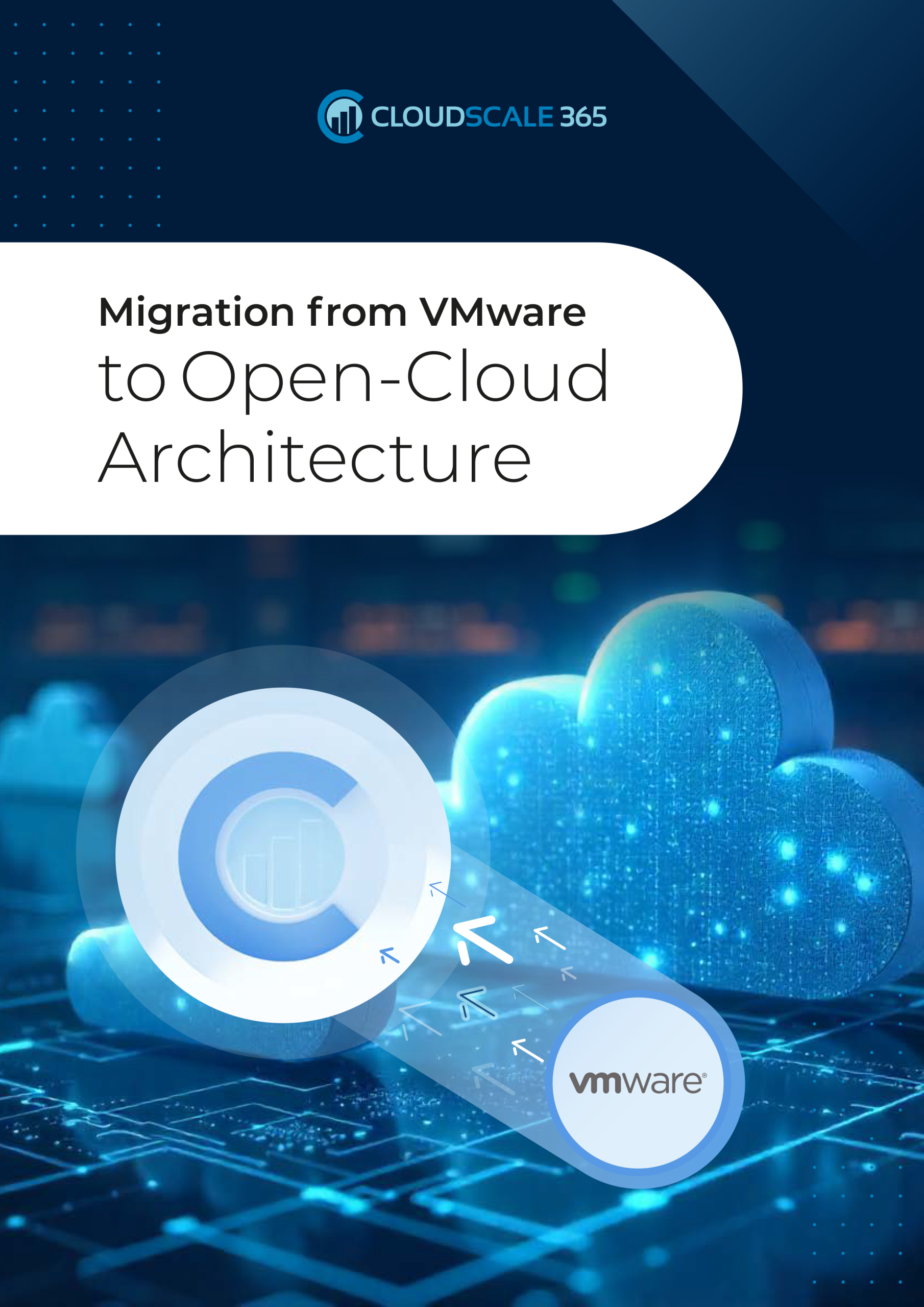
VMware Migration Guide: From VMware to Open-Cloud Architecture
When Broadcom acquired VMware, the ripple effects hit businesses of every size – but none more than SMBs. The once-stable platform suddenly became more expensive, less flexible, and harder to manage. With product lines discontinued, support costs skyrocketing, and licensing structures shifting beneath their feet, many IT leaders found themselves asking the same question: What’s next?
The answer is simple – freedom through open architecture andprivate cloud.
The Path to Vendor Independence
For years, VMware helped define the virtualization era, but times have changed. The new reality is clear: relying on a single proprietary platform creates risk—financially, operationally, and strategically. Vendor lock-in doesn’t just limit your choices; it limits your growth.
That’s why more organizations are making the move to open-architecture private clouds. By embracing open technologies like KVM, OpenNebula, and StorPool, you can reclaim control over your IT infrastructure – free from restrictive per-core or per-VM pricing. This shift is about more than technology; it’s about independence, flexibility, and long-term sustainability.
Why a Private Cloud with an Experienced MSP is the Smarter Move
Transitioning away from VMware doesn’t have to be risky or disruptive – especially when you partner with a trusted managed service provider (MSP) that lives and breathes cloud migrations. A seasoned MSP like CloudScale365 combines the best of both worlds: the performance and control of a private cloud with the hands-on expertise of a full-service provider.
This means:
A seamless migration process – handled by experts who know how to move workloads safely, efficiently, and without downtime.
Predictable, transparent pricing – no surprise invoices or licensing confusion.
24/7 U.S.-based support – real people ready to keep your environment optimized and secure.
SLA-backed reliability – enterprise-grade uptime and performance you can count on.
Unlike hyperscalers that push you into rigid contracts or proprietary architectures, CloudScale365’s open-architecture cloud is built for flexibility. You stay in control—free to integrate, innovate, and evolve as your business grows.
Get the Free VMware Migration Guide
Our new VMware Migration Guide: From VMware to Open-Cloud Architecture walks you through the entire process – step by step. You’ll learn how to avoid VMware’s price traps, migrate securely, and modernize your IT with a predictable, cost-effective model.
What’s Inside:
Real SMB case studies saving 50–70% on IT costs
A 6-step proven migration framework
Key differences between VMware, hyperscalers, and open-architecture clouds
Best practices for seamless migration and long-term optimization
Download the guide today and take the first step toward a cloud environment that’s open, affordable, and built around your business – not someone else’s bottom line.
Why Now?
Every month you stay on VMware, the costs rise and your options narrow. The longer you wait, the harder it becomes to untangle from licensing complexity and escalating fees. Moving to an open-architecture private cloud isn’t just a technical upgrade – it’s a strategic pivot that safeguards your business from uncertainty and positions you for future growth. Download the guide and learn more!